Ice and Snow World
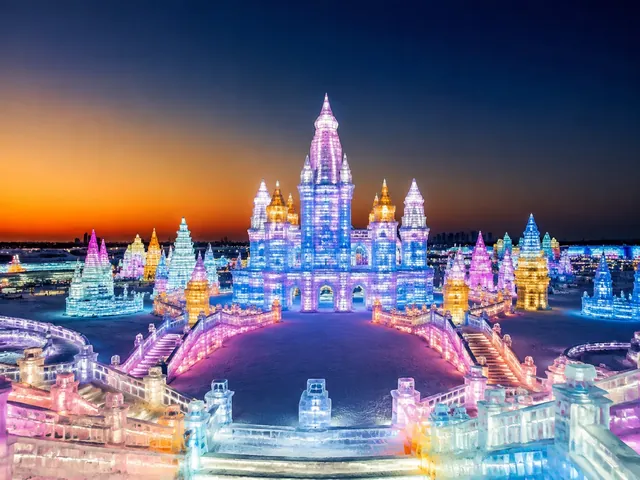
The main ice festival park; go after dark when the sculptures light up.
Northeast China · Hā’ěrbīn
Harbin is China’s winter city — known internationally as the Ice City — and home to the world’s largest ice and snow festival, Russian-influenced architecture, and a frozen river you can walk on. It is a completely different version of China, worth visiting between late December and late February. The best time to visit Harbin is early January for the freshest ice sculptures, or late February for lower prices and thinner crowds.
The verdict
Harbin is the single best winter city in China. Two nights during the ice festival, and dress for -20°C.
Harbin
Harbin Ice and Snow World
Quick facts
Region
Northeast China
Best months
Dec, Jan, Feb
Suggested stay
2 days
Daily budget
$45-85
Travel style
winter, photography, family
Top attraction
Harbin Ice and Snow World
Rail access
North gate to Beijing and the China-Russia border region
Best for
Winter travelers who want ice festivals, snow, and Russian-influenced architecture.
Why visit
Harbin hosts the world’s largest ice and snow festival and offers a completely different, Russian-flavored side of China. It is the definitive winter destination.
Best for: Winter travelers who want ice festivals, snow, and Russian-influenced architecture.
Skip Harbin if: You dislike extreme cold, are visiting outside December-February, or only care about classic Chinese landmarks.
Season guide
The ice festival runs roughly late December to late February, and the city is at its peak in January. Temperatures sit at -15°C to -25°C, so this is a winter-only destination — outside the festival months, Harbin is a pleasant but unremarkable northern city. Go in early January for the freshest ice sculptures, or late February for lower prices and smaller crowds.
Sweet spot
Dec, Jan, Feb
Budget
A mid-range day runs $45-85: $30-55 for a hotel, $10-20 for meals, and $10-40 for tickets. The Ice and Snow World is the big expense at about $35-45 — worth it after dark. Central Street snacks (candied hawthorn, Russian bread, Harbin sausage) are cheap. Winter flights and hotels are the main budget pressure; book early.
Mid-range day
$45-85
Suggested stay
2 days
Getting there
Harbin Taiping (HRB) airport is about 40 minutes from the city by airport bus or taxi, with direct flights from major Chinese cities. By rail, Harbin West station links Beijing in about 5-6 hours by high-speed train. Taxis are cheap and essential in the cold; the metro covers Central Street to the festival park corridor.
Rail links
North gate to Beijing and the China-Russia border region
Getting around: Taxis are cheap and essential in the cold; the metro covers the main corridor.
Top attractions
The main ice festival park; go after dark when the sculptures light up.
A cobblestone pedestrian street with Russian architecture and frozen treats.
A green-domed Russian Orthodox church, now a photo landmark.
Home to the snow sculpture festival, across the river from the city.
Freezes solid in winter for ice slides and horse-drawn sleighs.
Day by day
Paced so you see the headline sights without rushing. Times are estimates; book big-ticket attractions and entry slots ahead, especially in peak season.
Day 1
Day 1: Central Street and Saint Sophia, then Ice and Snow World after dark.
Day 2
Day 2: Sun Island snow sculptures, then the frozen Songhua River.
Central Street to be near the action, or near the festival park to avoid late-night taxis.
Guo bao rou (sweet-and-sour pork), Harbin red sausage, and frozen pears. Russian-style breads and beer are everywhere.
Guo bao rou, Harbin sausage, frozen pears
Quick answers
The questions travelers ask about Harbin most, answered straight.
Arrive around 4-4:30pm: enough daylight to see the sculptures’ detail, then the lights switch on around 5pm and the park transforms. Two hours is the average visit. The weekend evenings are the busiest — go on a weekday if your dates allow.
Layer in three: thermal base layer, fleece or down mid layer, and a windproof down jacket. Add a hat covering your ears, a scarf over your mouth, insulated boots with thick socks, and glove liners under mittens — the exposed 10 minutes at the festival park are the worst part. Heat packs for hands and phone are sold at Central Street.
No — save it for winter. The Central Street architecture and Saint Sophia Cathedral are charming, but they do not justify a long trip in other seasons. If you are passing through in summer, half a day covers the sights; the city is a winter destination and the festival is the reason to go.
The full winter circuit: Sun Island for the snow-sculpture festival (daytime), the frozen Songhua River for ice slides and horse-drawn sleighs, Central Street for the architecture and snacks, and Saint Sophia Cathedral for photos. Two nights covers everything; a third is only needed if you add a day trip like the Yabuli ski resort.
Because the winter lasts five months and the average January temperature is -19°C. The nickname “Bingcheng” (冰城, Ice City) is a century old, from the time Harbin was a Russian-built city on the Chinese Eastern Railway. The Ice and Snow World festival — the world’s largest — is built from blocks cut out of the frozen Songhua River every year, which is the part most visitors actually come to see.
No. January is brutally cold (-15 to -25°C) but July averages 23°C and is genuinely pleasant — Harbin is a popular summer escape for northeast Chinese. The city is busy year-round; the cold is concentrated in December through February, which is also when the festival runs and most international visitors come.
Late December to late February, peaking in January. Early January has the freshest ice sculptures (the festival opens around January 5); late February has thinner crowds and 20-30% cheaper hotels. Avoid the Spring Festival week (late January or mid-February depending on the year) — it is the worst combination of cold and crowds.
Keep the route going
Still deciding?
Compare all 15 cities by budget, season, and rail links on the homepage, or take the two-minute city match quiz.