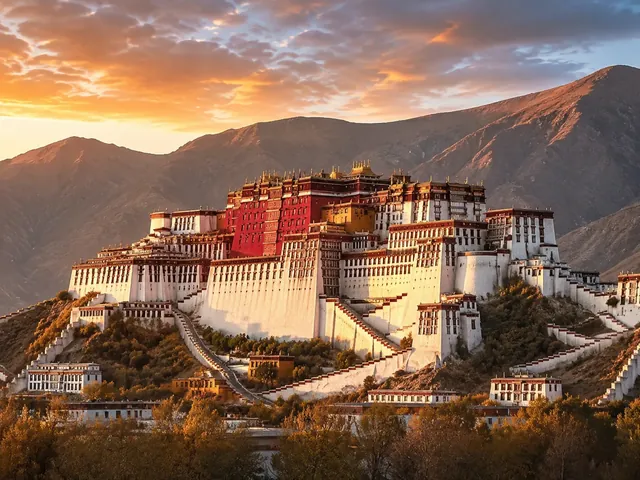
Potala Palace
The hilltop palace of the Dalai Lamas; book a timed entry slot in advance.
Tibet · Lāsà
Lhasa is the spiritual heart of Tibet: the Potala Palace above the city, pilgrims circling the Jokhang Temple, and an atmosphere found nowhere else in China. It is a bucket-list destination with real logistics — altitude, permits, and a slower pace — and it rewards those who plan for it.
The verdict
Lhasa is a bucket-list trip, not a casual add-on. Allow three days, plan for altitude, and book permits well ahead.
Lhasa
Potala Palace and Jokhang Temple
Quick facts
Region
Tibet
Best months
May, Jun, Sep, Oct
Suggested stay
3 days
Daily budget
$70-130
Travel style
history, photography, nature
Top attraction
Potala Palace and Jokhang Temple
Rail access
Reachable by flight or the Qinghai-Tibet railway from Chengdu or Xining
Best for
Tibetan culture, high-altitude landscapes, and once-in-a-lifetime pilgrimage sites.
Why visit
Lhasa is the spiritual and cultural heart of Tibet, with the Potala Palace and Jokhang Temple offering an experience unlike any other city in China.
Best for: Tibetan culture, high-altitude landscapes, and once-in-a-lifetime pilgrimage sites.
Skip Lhasa if: You are short on time, sensitive to altitude, or visiting on a tight budget. Tibet also requires a separate travel permit.
Season guide
May-June and September-October are the best months: clear skies, 10-20°C days, and fewer visitors. July-August is the rainy season with afternoon showers, but the air is the year’s cleanest. Winter (November-March) is dry, cold, and sunny, with the lowest prices and fewest travelers — the Potala is photogenic against winter light. Whenever you go, plan a rest day for acclimatization.
Sweet spot
May, Jun, Sep, Oct
Budget
Lhasa is not a budget destination: $70-130 per day with mid-range hotels (Tibet’s lodging stock is limited and prices are firm). The Potala Palace ticket is about $25-30 with a timed slot; Jokhang is about $10. The real cost is logistics — permits, guides, and internal transport for anything beyond the city add $50-100 per day.
Mid-range day
$70-130
Suggested stay
3 days
Getting there
Most travelers fly into Lhasa Gonggar (LXA), about 1 hour from the city by airport shuttle or taxi. The Qinghai-Tibet railway from Xining (about 21 hours) or Chengdu is the scenic alternative, with permits and tickets arranged by your tour. Inside the city, taxis and the old-town walks cover everything; anything outside Lhasa requires a guide and a private vehicle.
Rail links
Reachable by flight or the Qinghai-Tibet railway from Chengdu or Xining
Getting around: The old town is walkable; taxis are cheap for everything else. You must join a tour or hire a driver for anything outside the city.
Top attractions
The hilltop palace of the Dalai Lamas; book a timed entry slot in advance.
Tibet’s holiest temple, ringed by pilgrims on the Barkhor circuit.
The pilgrimage loop and market around Jokhang; walk it clockwise.
Famous for the afternoon monks’ debate; usually around 3pm.
The former summer palace with gardens and painted chapels.
Day by day
Paced so you see the headline sights without rushing. Times are estimates; book big-ticket attractions and entry slots ahead, especially in peak season.
Day 1
Day 1: Land, rest, and acclimatize with a slow walk around Barkhor Street.
Day 2
Day 2: Jokhang Temple in the morning, Sera Monastery debate in the afternoon.
Day 3
Day 3: Potala Palace (timed entry), then Norbulingka if time allows.
Near Barkhor Street for the old-town atmosphere and easy walks to the temples.
Tsampa (roasted barley flour), yak meat, momo dumplings, and butter tea. Most travelers find Tibetan food hearty but simple.
Tsampa, yak meat, butter tea
Quick answers
The questions travelers ask about Lhasa most, answered straight.
Lhasa sits at 3,650 meters, so plan a light first day: arrive, rest, and take only a slow Barkhor walk. Drink water, avoid alcohol and heavy meals, and move slowly for the first 48 hours. Mild headache is common; persistent symptoms or breathing trouble at rest mean descending. Most travelers acclimatize within two days.
Yes. Foreign travelers need a Tibet Travel Permit, arranged through a licensed agency before arrival — it is tied to your itinerary and guides, not bookable on your own. You also need a Chinese visa, and additional permits apply beyond Lhasa (for example, for Everest Base Camp or the Mount Kailash area). Book at least two weeks ahead.
Timed entry slots are issued a few days in advance and sell out fast in peak season — your agency or hotel usually handles this, and foreign visitors typically get slots allocated with their tour. Bring your passport and arrive 30 minutes early. The tour inside takes about 1.5 hours; photos are not allowed in most chapels.
Three days is the standard minimum: day 1 to land and acclimatize, day 2 for Jokhang and the Sera Monastery debate, day 3 for the Potala and Barkhor. Add a fourth for Norbulingka or a day trip to Yamdrok Lake. Anything less than three days pushes the altitude and the schedule too hard.
Still deciding?
Compare all 15 cities by budget, season, and rail links on the homepage, or take the two-minute city match quiz.